
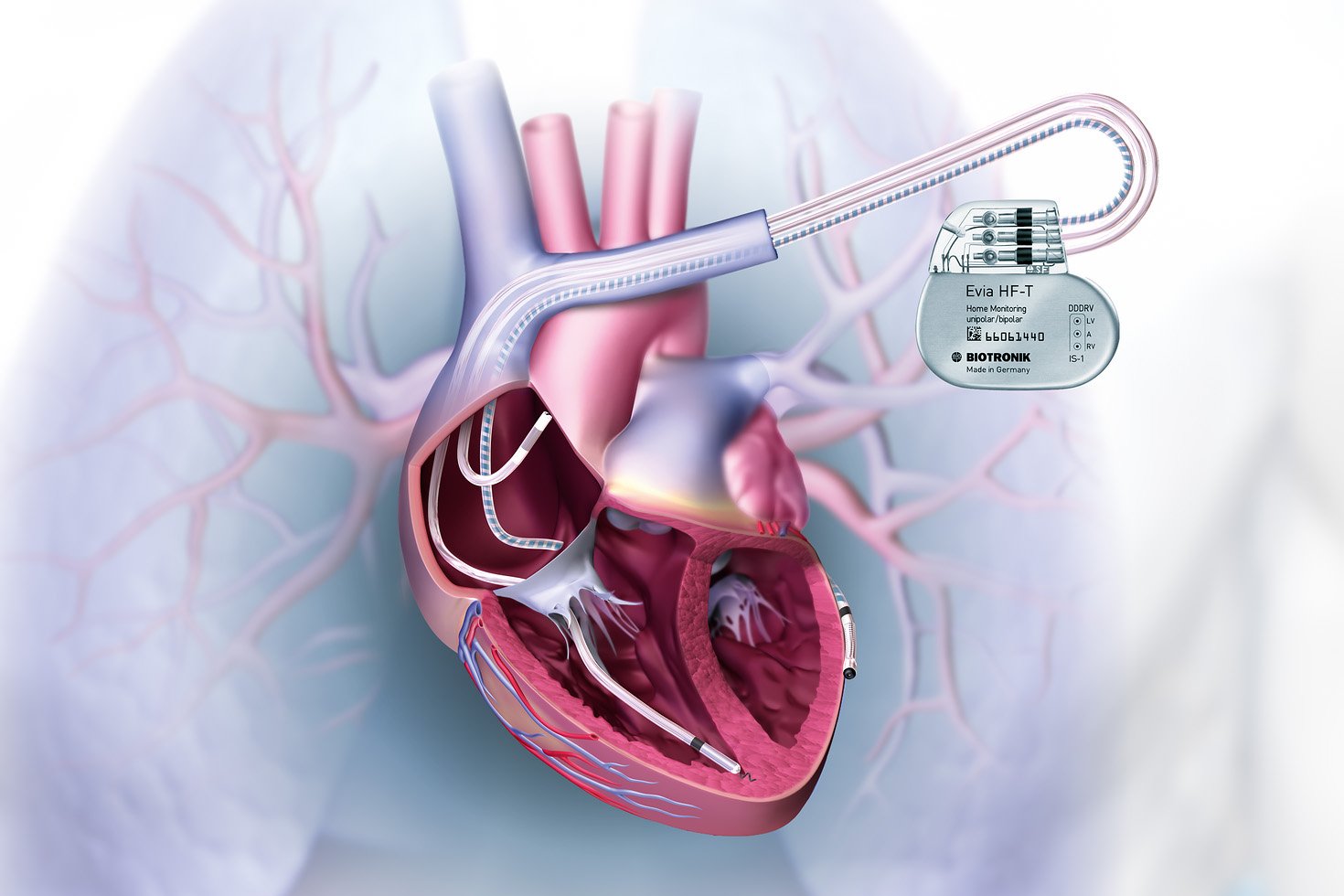
Cardiac Resynchronization Therapy Defibrillator
A Cardiac Resynchronization Therapy Defibrillator (CRT-D) is an advanced cardiac device used to treat heart failure and life-threatening abnormal heart rhythms. It combines the functions of a biventricular pacemaker and an implantable cardioverter defibrillator (ICD).
CRT-D helps the heart’s chambers beat in a coordinated manner while also delivering a life-saving shock if a dangerous rhythm is detected.
Who Needs a CRT-D?
CRT-D may be recommended for patients with:
-
Moderate to severe heart failure
-
Reduced left ventricular ejection fraction (LVEF)
-
Electrical conduction delay (such as left bundle branch block)
-
Symptoms like fatigue, shortness of breath, or swelling
-
High risk of sudden cardiac arrest due to ventricular arrhythmias
How Does CRT-D Work?
-
Resynchronization Therapy: Coordinates the contractions of the right and left ventricles, improving the heart’s pumping efficiency
-
Defibrillation: Detects dangerous heart rhythms and delivers an electrical shock to restore a normal rhythm
-
Pacing Support: Prevents slow heart rates and rhythm irregularities