
Stress Test Treadmill Test
A Stress Test, also known as a Treadmill Test (TMT), is a non-invasive cardiac test used to evaluate how well the heart performs during physical exertion. It helps detect coronary artery disease, abnormal heart rhythms, and exercise-related heart problems that may not appear when the body is at rest.
Why Is a Stress Test Done?
A TMT is recommended to:
-
Diagnose coronary artery disease (CAD)
-
Evaluate chest pain or shortness of breath
-
Assess exercise tolerance and heart fitness
-
Monitor heart health after angioplasty or bypass surgery
-
Detect exercise-induced heart rhythm abnormalities
How Is a Treadmill Test Performed?
-
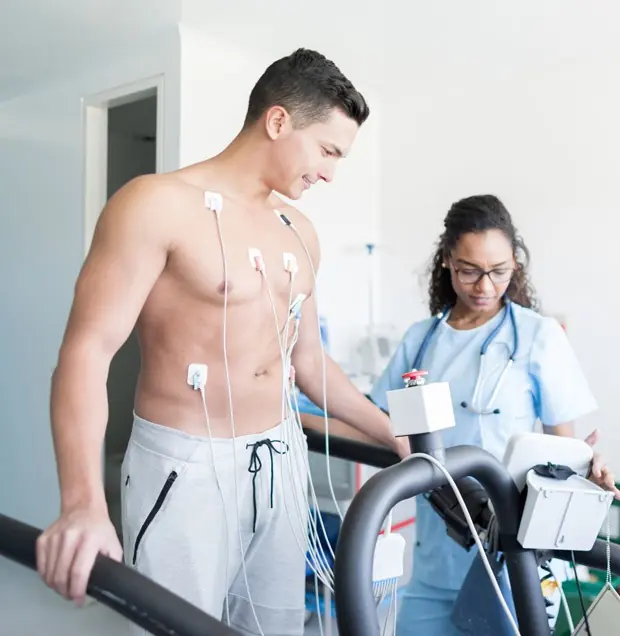
Electrodes are placed on the chest to monitor ECG
-
Blood pressure and heart rate are continuously recorded
-
The patient walks on a treadmill with gradually increasing speed and incline
-
The test is stopped if target heart rate is achieved or symptoms occur
The test usually lasts 10–15 minutes.
Benefits of Stress Test / TMT
-
Non-invasive and painless
-
Helps detect heart artery blockages
-
Evaluates heart response to exercise
-
Quick and widely available diagnostic test
-
Useful for fitness and treatment planning